Classic Cheesecake
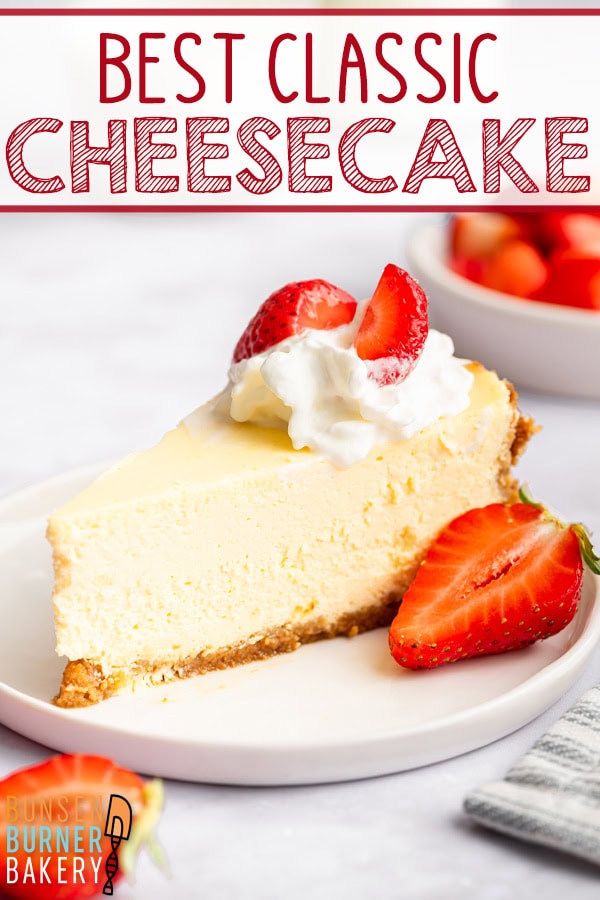
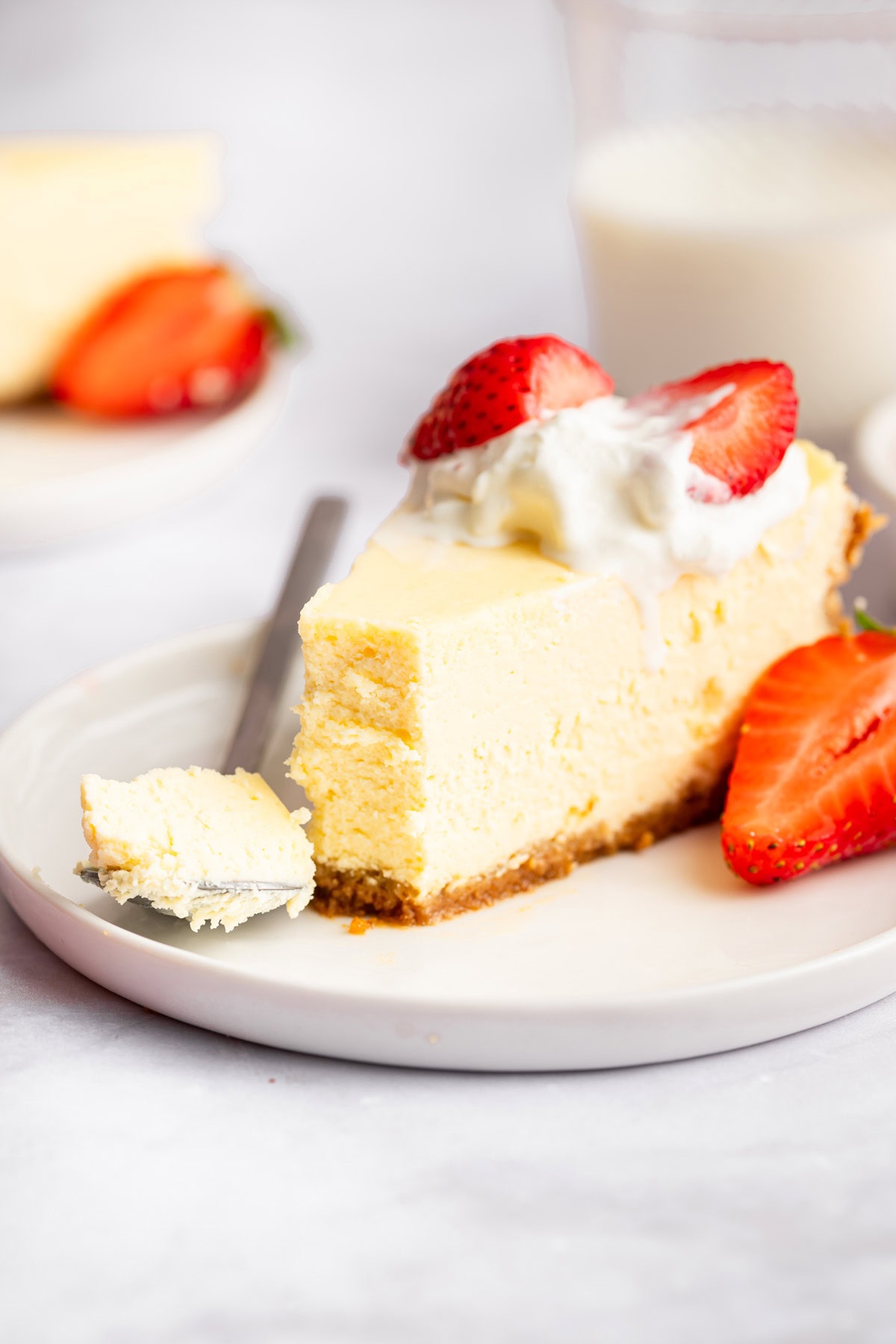
This Classic Cheesecake is smooth, creamy, and perfectly balanced, with a buttery graham cracker crust and a rich vanilla filling that bakes up dense yet silky. Made in the style of a traditional New York-style cheesecake, it delivers a firm, substantial slice with a clean flavor and a smooth, crack-resistant finish.
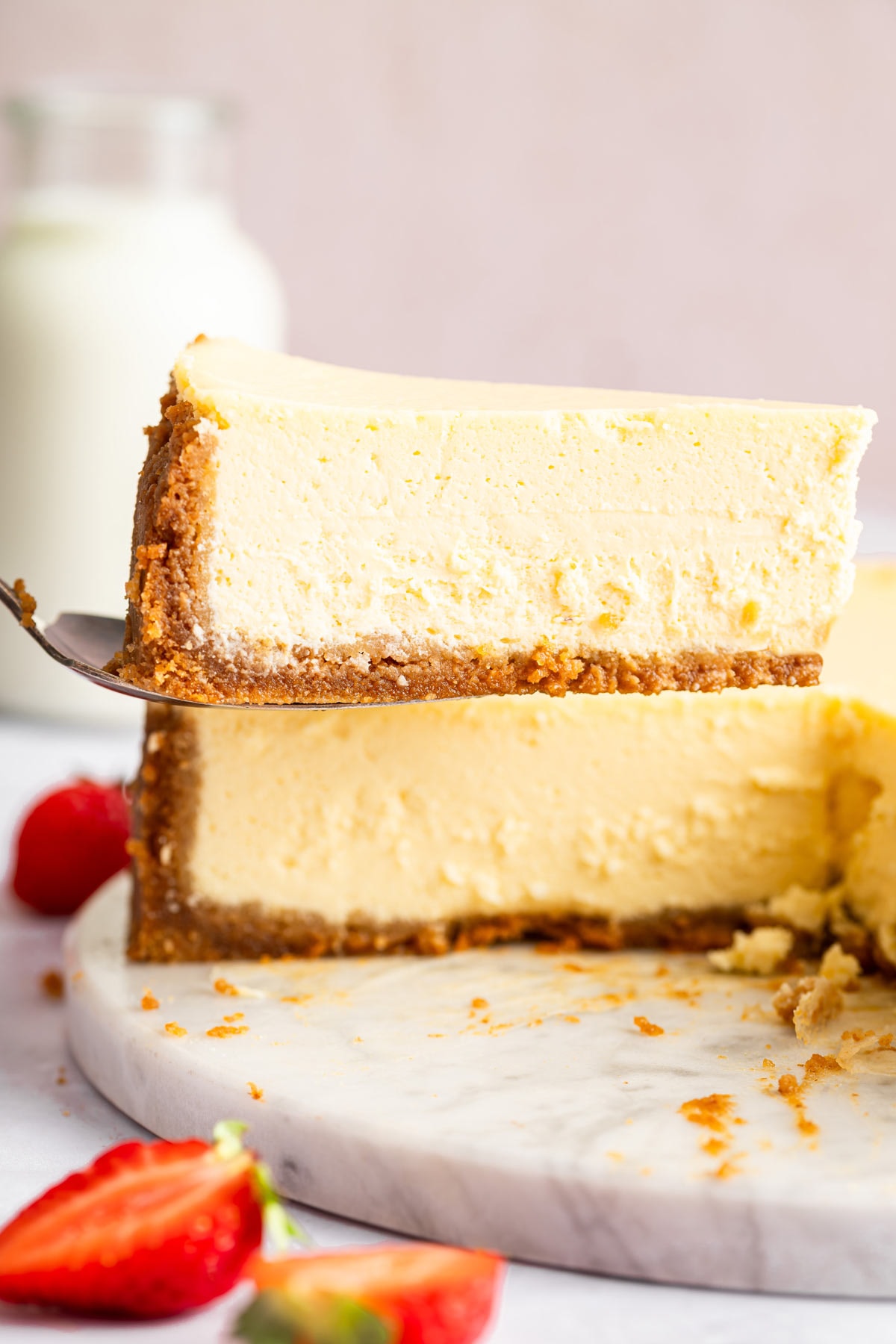
Cheesecakes are some of the most popular recipes on my site, but I’ve never shared a plain, classic version until now. I have chocolate cheesecakes, fruit-swirled cheesecakes, cookie-loaded cheesecakes, and plenty of over-the-top variations. But sometimes, what you really want is the best plain classic cheesecake.
Why This Recipe Works:
- Room Temperature Ingredients: Ensures a smooth, lump-free batter and prevents overmixing.
- Sour Cream: Adds slight acidity for a smoother, tighter protein network.
- Minimal Mixing: Reduces excess air, which helps prevent cracks.
- Water Bath Baking: Gently regulates heat to prevent overbaking the edges before the center sets.
It’s the same foundation I use for many of my other cheesecakes, just stripped down to the essentials. No swirls, no mix-ins, no extra layers. Just a creamy, well-structured filling with real vanilla flavor and a crust that holds together cleanly when sliced.
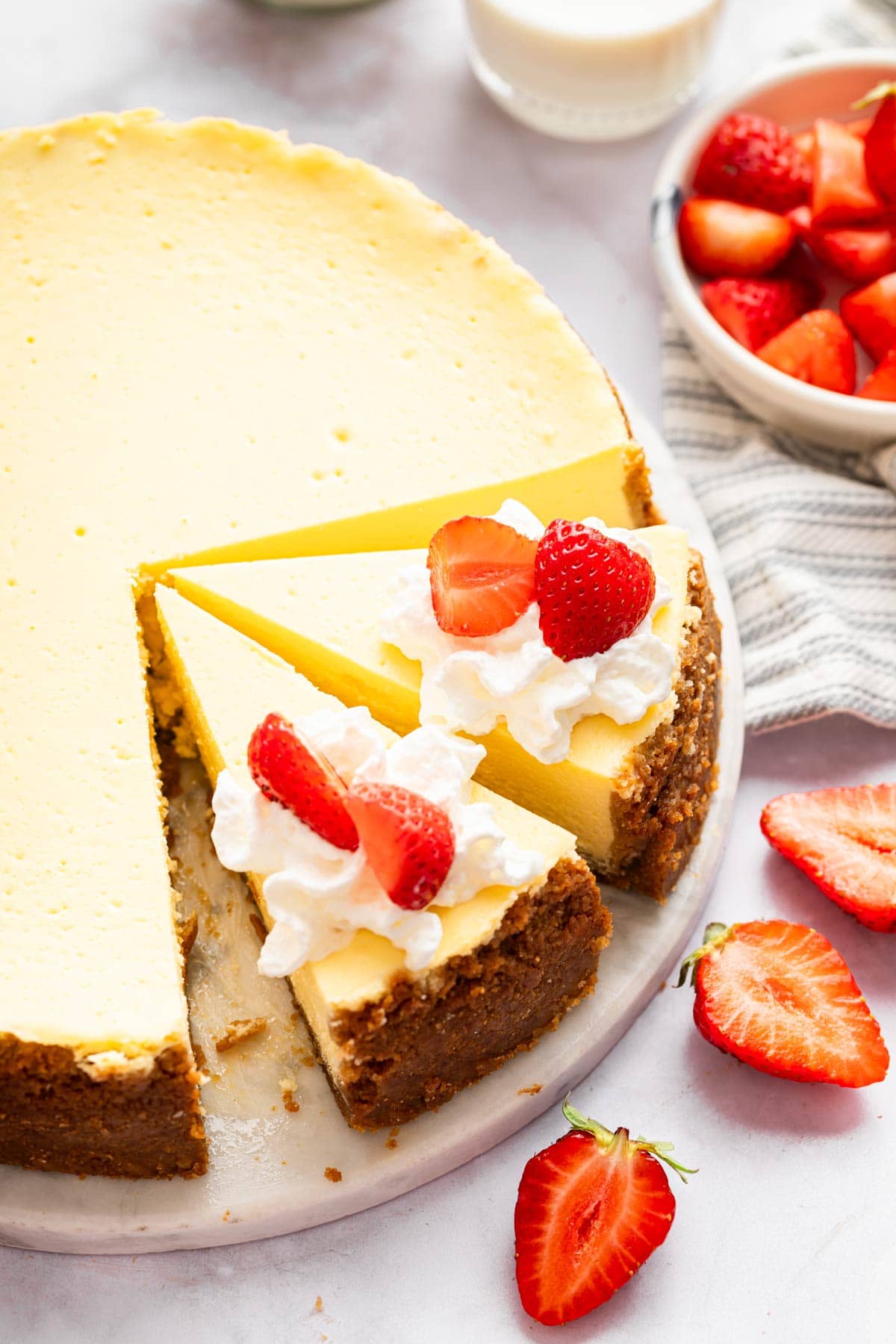
It follows the structure of a New York-style cheesecake, meaning a high ratio of cream cheese, whole eggs for structure, and a slow, gentle bake. The combination gives you a dense, substantial slice that still feels smooth and creamy instead of heavy or dry.
What sets this version apart is balance. The sour cream softens the texture just enough so the cheesecake stays rich without becoming stiff, and the baking method is designed to minimize cracks, so you get that smooth top without having to cover it in toppings.
Ingredients and Substitutions
Pictured below is what you’ll need to make this baked cheesecake, along with some key ingredient notes and substitutions.
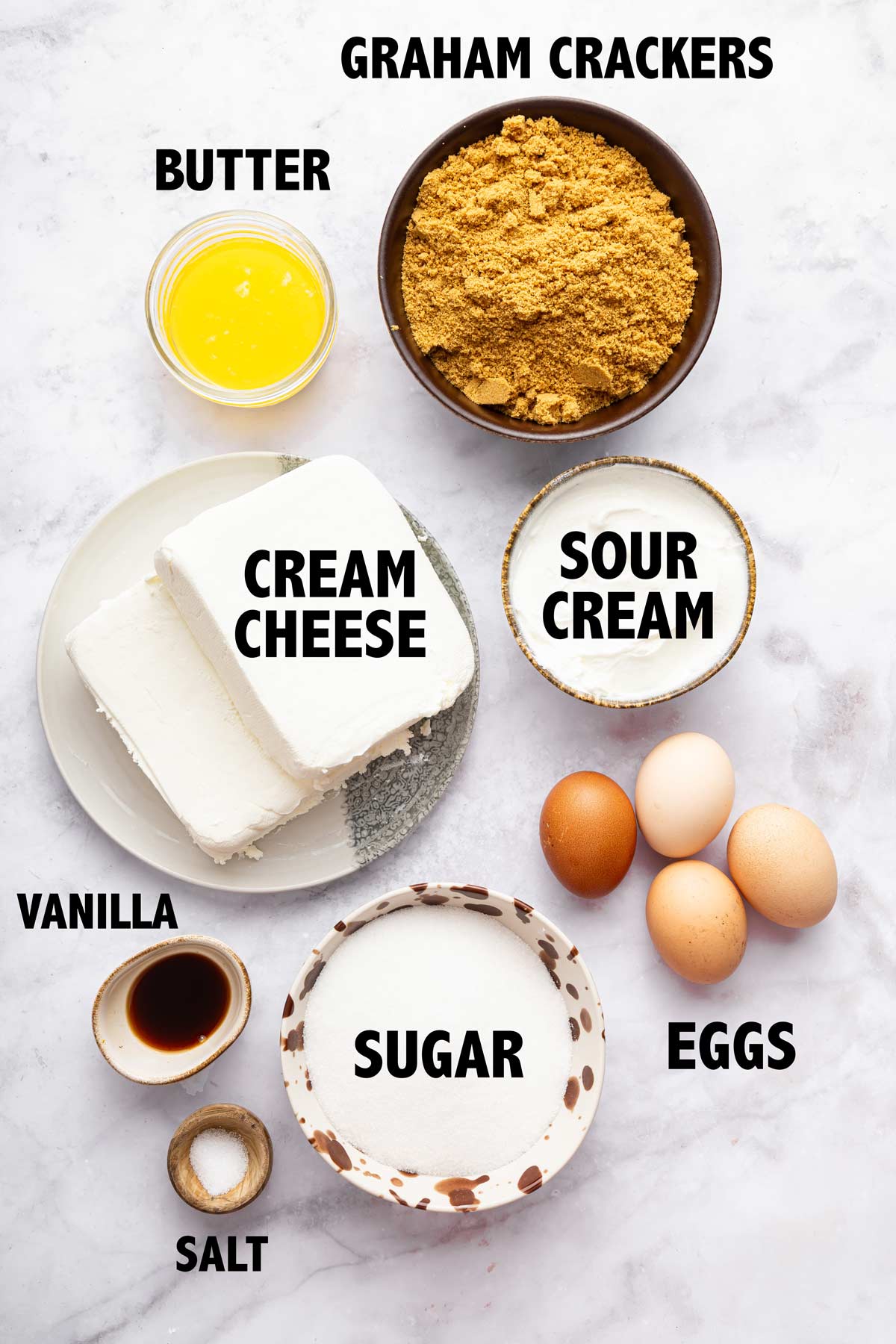
- Graham Cracker Crumbs: Finely crushed crumbs are key – larger pieces won’t compact properly and can crumble when slicing. For a gluten-free cheesecake, use gluten-free graham crackers.
- Cream Cheese: Use full-fat, block-style cream cheese at room temperature.
- Sour Cream: Heavy cream can be used in place of sour cream if you prefer a more neutral, less tangy dairy flavor. The cheesecake will be slightly richer and a bit less structured, but still smooth and creamy.
How to Make Classic Cheesecake
- Prepare the Crust: Mix the graham cracker crumbs, sugar, and melted butter and press firmly into the bottom of a springform pan. Bake briefly until set.

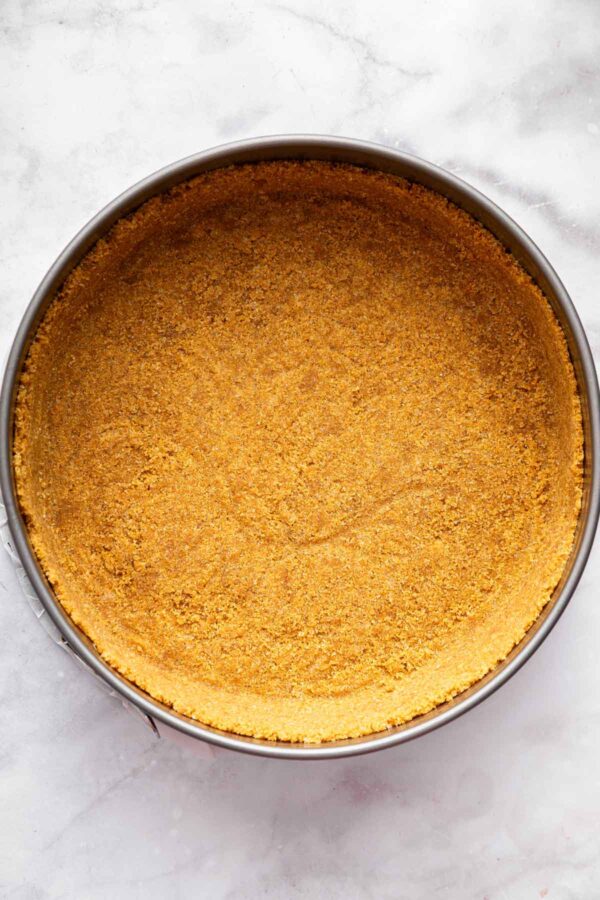
- Beat Cream Cheese: Using a mixer with the beater attachment, beat the softened cream cheese and sugar until completely smooth and creamy. Scrape down the sides of the bowl. Add the sour cream, vanilla extract, and salt, mixing until fully incorporated.


- Incorporate Eggs: Add the eggs one at a time, mixing just until combined after each addition. The batter should look smooth and glossy. Overmixing at this stage is one of the most common causes of cracks.


- Prepare the Water Bath: Wrap the outside of the springform pan in multiple layers of foil, or use a pan-in-pan method by placing it inside a slightly larger cake pan. Pour the cheesecake batter into the springform pan and set it inside a roasting pan filled with hot water.

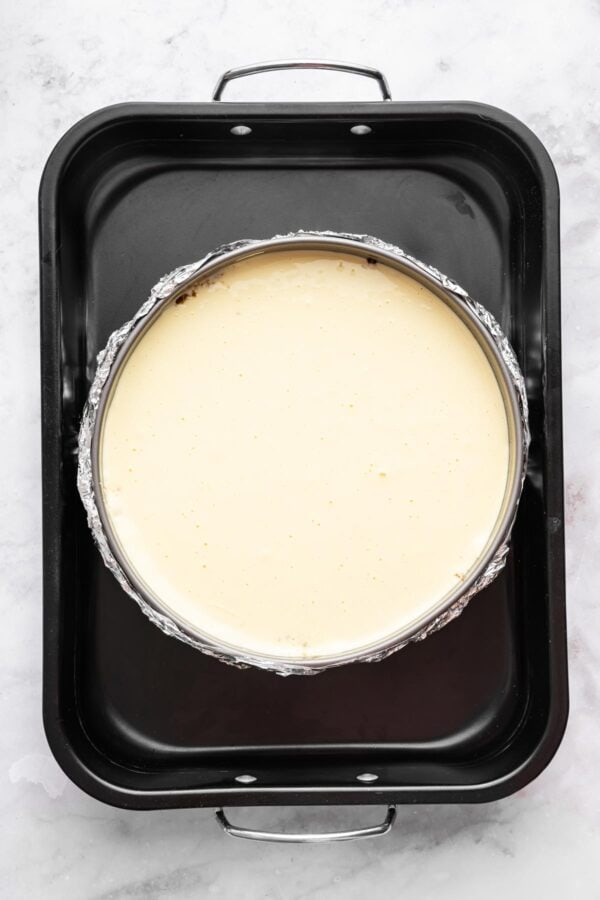
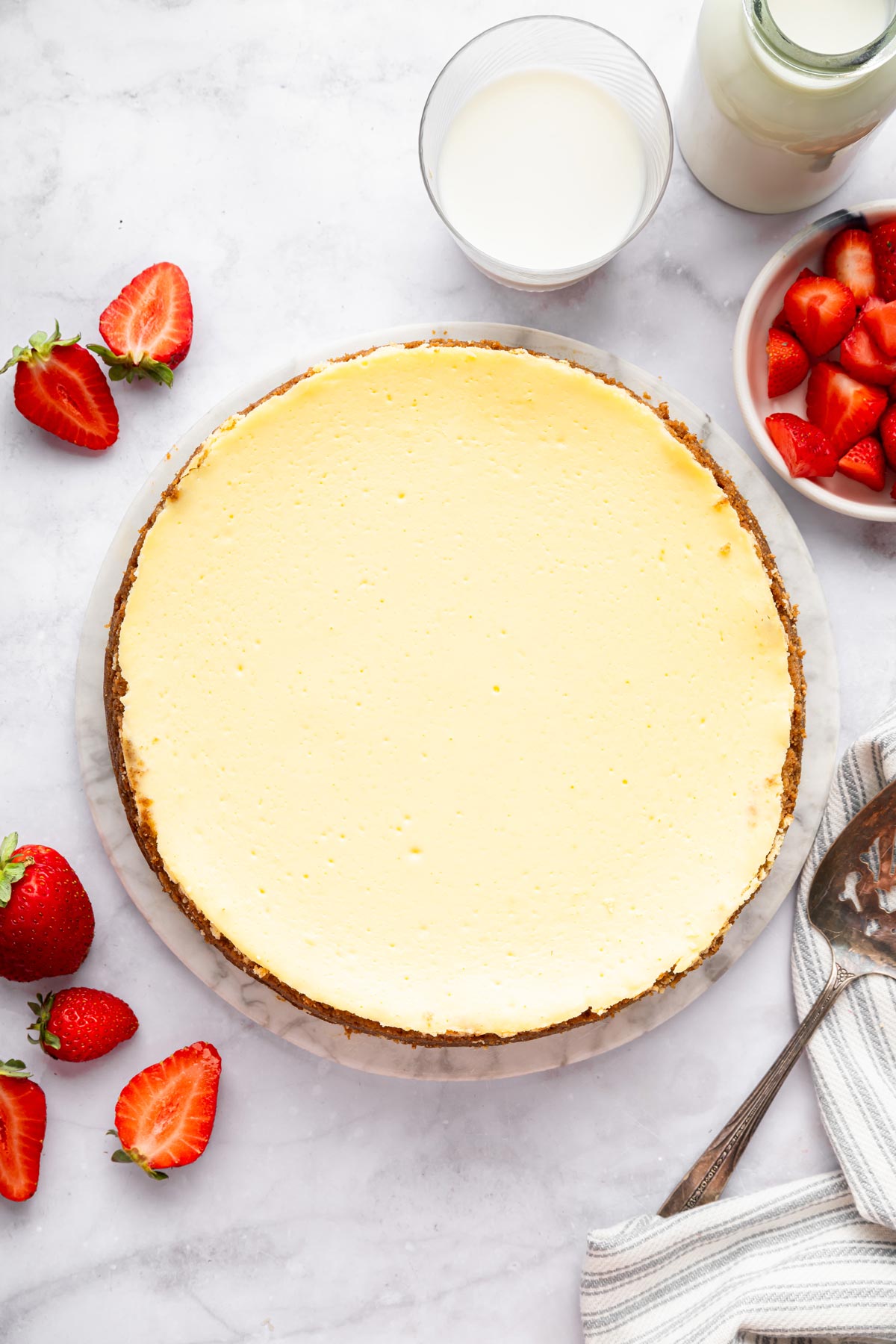
- Bake Gently: Bake until the edges are just set but a 3 to 4-inch circle in the center still jiggles slightly when nudged. The internal temperature should reach 150°F. The surface should look matte, not wet or shiny.
- Cool Gradually: Turn off the oven and prop the door open slightly. Let the cheesecake cool in the warm oven, then transfer to room temperature to cool further before refrigerating for at least 4 hours, preferably overnight. The texture will firm up and slice cleanly once fully chilled.
Sour Cream in Cheesecakes
All my cheesecake recipes use sour cream in the base, but sometimes I get a few questions as to why sour cream. If cream cheese is already rich and creamy, why are we adding sour cream, and does it really make a difference in the final texture?
Kitchen Chemistry
The acidity in sour cream lowers the pH of the cheesecake batter. As the cheesecake bakes and the egg proteins coagulate, the more acidic environment encourages a tighter, more uniform protein structure, resulting in a creamy, even interior.
If you really don’t like the slightly sour tang of cheesecakes made with sour cream, you can use heavy cream instead. Heavy cream adds richness but not acidity, so the cheesecake will set a bit softer and feel a bit looser. Just be careful not to overbake since you don’t have the same structural support from the acid.

Tips and Tricks for the Best Cheesecake
- Room Temperature Ingredients: Cream cheese, eggs, and sour cream should sit out long enough that they feel just slightly cool but soft to the touch, which ensures a smooth batter without overmixing.
- Beat Cream Cheese: Start by fully smoothing out the cream cheese and sugar before adding anything else, scraping the bowl well so no lumps hide at the bottom.
- Mix Gently After Eggs: Once the eggs are added, mix just until combined to avoid incorporating excess air that can lead to cracks.
- Heavy Cream: Prefer your cheesecakes sweeter without a little tang? You can substitute heavy cream for the sour cream in equal amounts.
- Jiggly Center: The cheesecake is done when the edges are set and the center still has a 3 to 4-inch circle that jiggles, not sloshes. An instant-read thermometer inserted into the center should read 150°F for a perfectly set texture without overbaking.
- Cool Gradually: Cool in three steps – in the oven, on the counter, in the refrigerator – to reduce the risk of cracking.
- Hot Knife: For clean slices, dip a sharp knife in hot water and wipe it dry between cuts for neat, professional-looking slices.
- Variations: For an easy but different take on a classic cheesecake, use an Oreo crust or decorate with fresh berries and whipped cream.
- Storage: Store the cheesecake covered in the refrigerator for up to 5 days. Once fully chilled, wrap it tightly with plastic wrap or aluminum foil to prevent it from absorbing refrigerator odors. To freeze, wrap the whole cheesecake or individual slices in plastic wrap and then foil and freeze for up to 2 months. Thaw overnight in the refrigerator before serving.
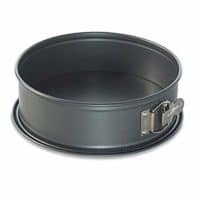
- Recommended Tools: 9-inch Springform Pan | 10 Inch Cake Pan | Stand Mixer | Kitchen Scale
More Classic Dessert Recipes
- Best Chocolate Cupcakes
- Vanilla Sheet Cake
- Chocolate Sheet Cake
- Chocolate Layer Cake
- Perfect Chewy Brownies

Classic Cheesecake
Smooth, dense, and creamy with a buttery graham cracker crust, this classic baked cheesecake delivers that perfect New York–style texture with a crack-free finish.
Ingredients
For the Crust:
- 1 1/2 cups (213 grams) graham cracker crumbs (approximately 14 full size sheets, finely crushed)
- 1/3 cup (66 grams) granulated sugar
- 6 tablespoons (85 grams) unsalted butter, melted
For the Cheesecake:
- 32 ounces (908 grams) cream cheese, room temperature
- 1 cup (198 grams) granulated sugar
- 2/3 cup (151 grams) sour cream, room temperature
- 2 teaspoons vanilla extract
- 1/4 teaspoon salt
- 4 large eggs, room temperature
Instructions
- Make the crust. Preheat the oven to 350 °F. Combine all crust ingredients in a small bowl. Press the crumbs along the bottom and extend partway up the sides of a 9-inch springform pan, compacting the crumbs as much as possible. Bake for 10 minutes, then remove from the oven. Reduce the heat to 325 °F.
- Make the cheesecake. Using an electric mixer with the paddle attachment, beat the cream cheese and sugar until creamy and well combined, for 2 to 3 minutes. Mix in the sour cream, vanilla extract, and salt on low speed until well combined. Scrape down the sides and bottom of the bowl. Add the eggs, one at a time, mixing just until combined after each addition. Do not over-mix the cheesecake - this makes it more likely to crack.
- Prepare the springform pan. Wrap the springform pan in 3 layers of aluminum foil, or create a pan-in-pan water bath by placing the 9-inch springform pan inside a 10-inch cake pan (both pans together will be placed inside the water bath). Pour the cheesecake batter into the graham cracker crust.
- Bake the cheesecake. Place the springform pan inside a larger roasting pan and pour hot water into the roasting pan until it reaches halfway up the sides of the springform pan (or the outer cake pan). Bake at 325 °F for 70 to 80 minutes, or until the edges have set but a 3 to 4-inch diameter circle in the center of the cheesecake still jiggles and the center of the cheesecake reaches 150 °F. Turn off the oven and prop the door open slightly. Cool in the oven for 30 minutes. Remove from the oven and run a thin knife around the edge to loosen. Cool at room temperature for 1 hour, then refrigerate for at least 4 hours, preferably overnight. Serve with whipped cream and fresh berries, if desired.
Notes
- Cooling gradually is essential, as sudden temperature changes increase the chance of cracking. Minor surface cracks do not affect texture or flavor and can easily be covered with whipped cream or fruit.
- Heavy cream can be used in equal amounts as sour cream for a less tangy flavor. The texture will be slightly softer and may be more prone to cracking, so avoid overbaking.
- For clean slices, dip a sharp knife in hot water and wipe it dry between cuts.
- Store cheesecake covered in the refrigerator for up to 5 days. For longer storage, wrap the fully chilled cheesecake or individual slices tightly in plastic wrap and then foil and freeze for up to 2 months. Thaw overnight in the refrigerator before serving.
- Recommended Tools: 9-inch Springform Pan | 10 Inch Cake Pan | Stand Mixer | Kitchen Scale
Recommended Products
As an Amazon Associate and member of other affiliate programs, I earn from qualifying purchases.